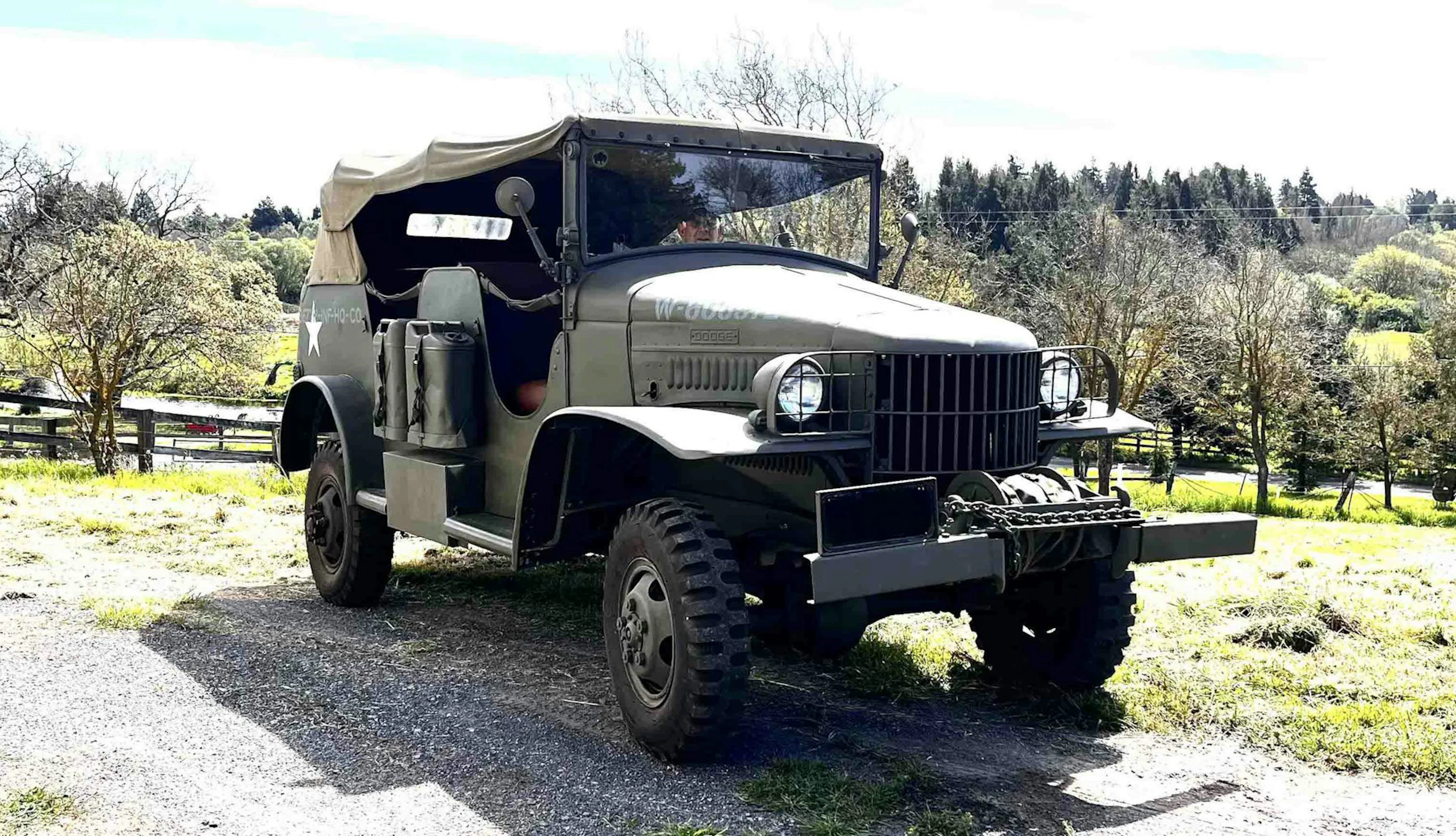
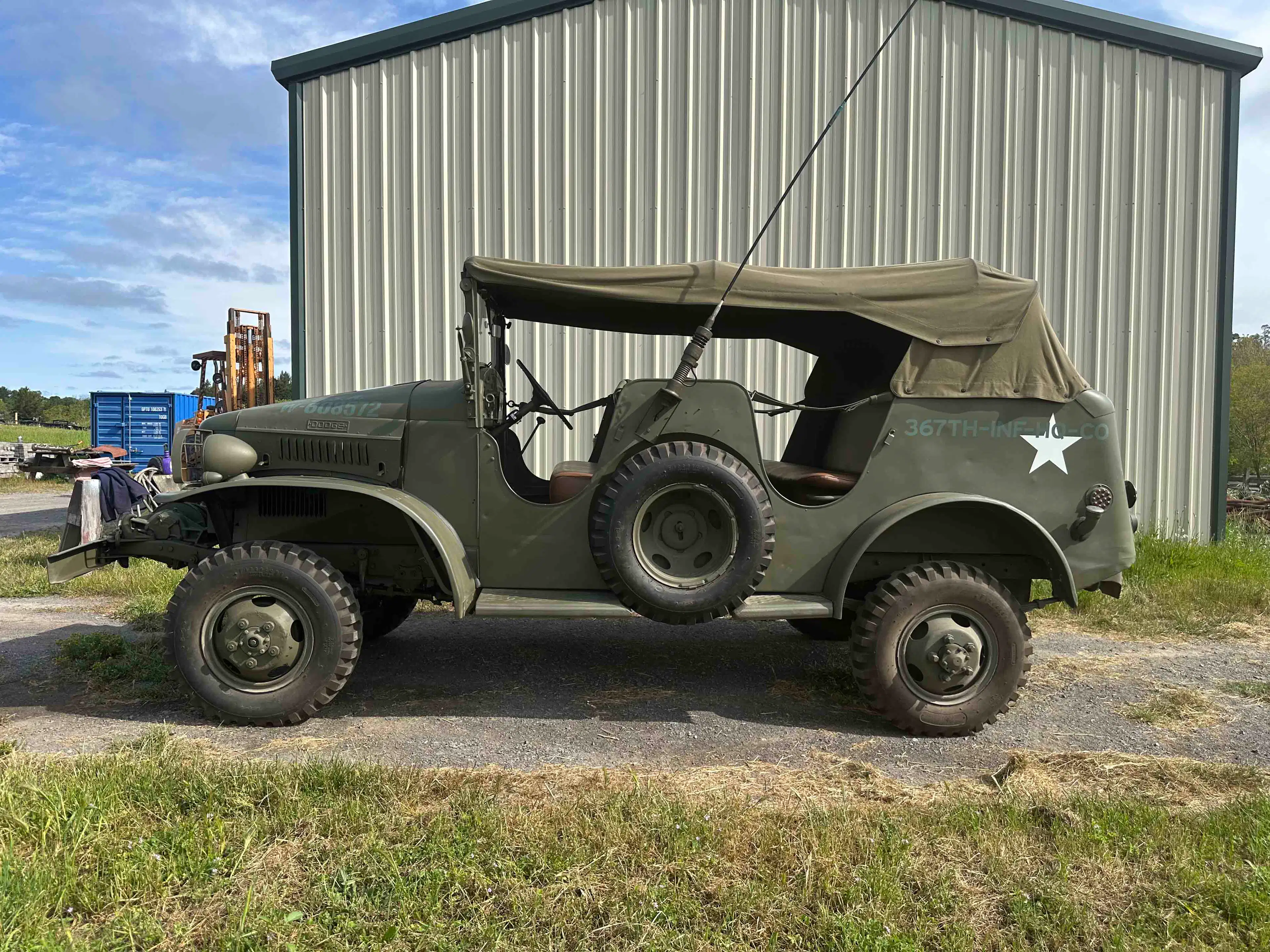
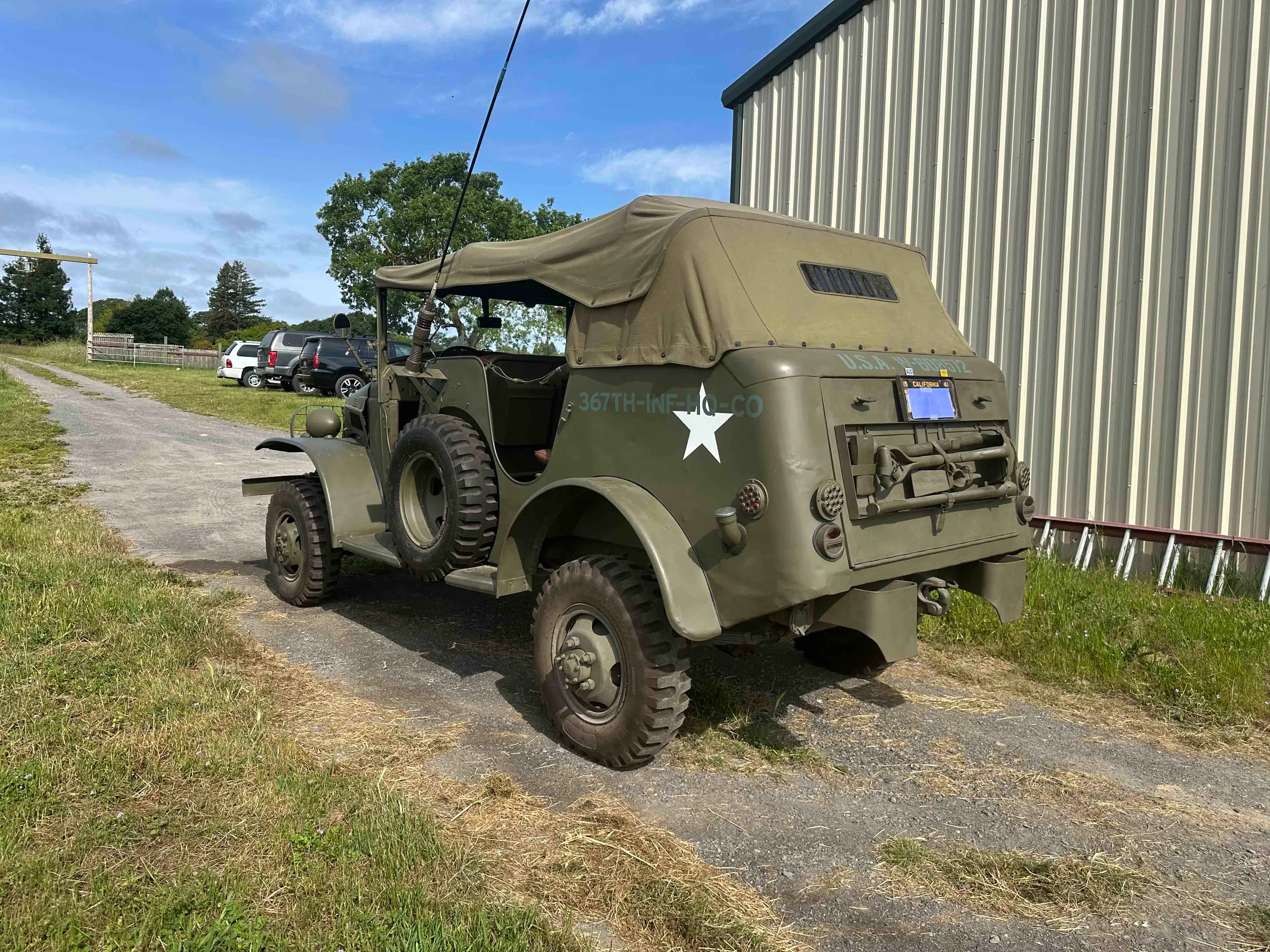
Buffalo Soldiers Division 1941 Dodge Radio Command Car WC24/25



Ended May 21, 2025 at 7:26 PM UTC

Recommended services

Addenda and errata
*Please note additional photos have been added to the photo gallery.
Video gallery
Description
OFFERED WITHOUT RESERVE
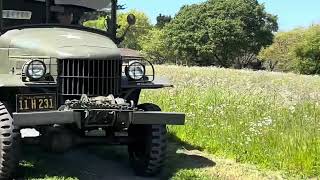
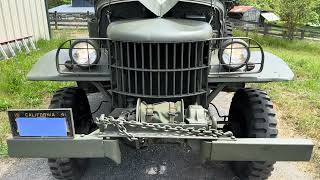
The 1941 Dodge Command Car WC24/25 was part of the Dodge WC series, a range of light military trucks produced during World War II. Though based on the civilian 1939 Dodge half-ton trucks, the 1941 WC series was a further evolution adapting to the onset of World War II. The grille was redesigned in a simple slat style that also served as a brush guard, as well as new fenders that collected less mud that would hinder forward progress. Dodge would build 30 different models of the WC with four-wheel drive and an additional eight two-wheel-drive models including closed cab pickups, command cars, radio cars, ambulances, telephone maintenance, and open cab pickups.
This 1941 Dodge WC24/25 is a mobile radio variant, the standard six-volt electrical system upgraded to 12 volts to power the vacuum tube radios. Like the other Army G-505 WC trucks, it’s powered by Chrysler’s T215 230 cubic-inch flathead inline-six engine rated at 92 horsepower, mated to a four-speed manual transmission and single-speed transfer case driving all four wheels. The 1941 Dodge WC24/25 was assigned to the U.S. Army 367th Infantry, 92nd Infantry Division— the famed Buffalo Soldiers Division, the only African American infantry division that participated in combat in Europe during World War II.
Highlights
Historic Radio Command Car from the Buffalo Soldiers Division
Correct 230 cu-in Chrysler T215 flathead inline-six engine rated at 92 hp
Four-speed manual transmission and single-speed transfer case
Retractible canvas roof with two rows of seats for up to six passengers
Enclosed rear storage compartment with fold-down tailgate
Features
Buffalo Soldiers Division markings
Antenna mounts
Jerry cans dated 1941and 1942
Pioneer tools
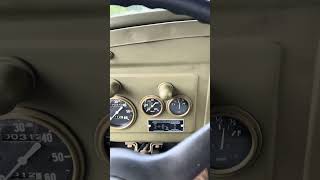
Original gauges
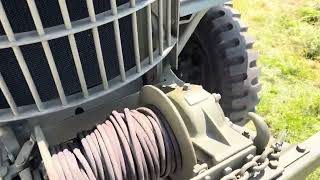
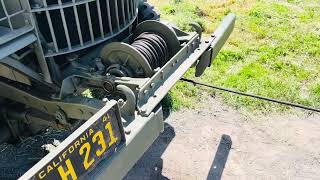
Working winch
Extra storage in old battery case
Original top bows with new canvas
Jerry Can straps are Vietnam era (better design)
Map board is new
Turn signals take the place of the black out lights and are LED
Known Imperfections
The King Bee reflectors are post-World War II
The engine is not the original due to a cracked block, but the replacement engine is the correct T215 230 cu-in straight six
A little Bondo on the right rear corner
Transfer case has a leaky seal
Minuscule leak from the forward PTO seal
Vacuum wipers are not functional
The spring on the button for the parking brake doesn't work but the brakes work without it
The original fuel filter is not hooked up since a modern fuel filter is placed before the fuel pump
Rear single stop light is post-World War II and inoperable
Included
Dodge U.S. War Department build card
Extra transmission and transfer case
Parts and Service manual
Wiring instruction manual
Ownership History
The consignor of this 1941 Dodge Command Car reports, “This vehicle was a Command Car for the 367th infantry of the 92nd infantry Division. After World War II it was transferred to the Commerce Department, then sold for civilian use. The build card from Dodge shows the vehicle was originally a 12-volt Radio Command Car, but at some point, the radios were removed, and it was converted to a standard six-volt Command Car. It was found in an old dairy farm, where it was used as a work truck. The front floor was badly rusted, so the floor and the hat channels were replaced on the body-off restoration. The rear trunk handles are new. I found a winch frame extension, and with urging from my older son, I added it and the correct MU1 winch and PTO, which functions well. The honeycomb radiator is a NOS replacement. The seats are recovered; the rear seat has the original springs. The blackout lights were changed to LED turn signal lights. The truck comes with a spare functional transmission and transfer case.”
All auction listings on Hagerty Marketplace are created using information provided by the seller. The Marketplace team and the seller have reviewed all information for accuracy to the best of their abilities. Bidders are ultimately responsible for conducting their own due diligence before placing a bid, including verifying details, condition, registration requirements, and compliance with applicable laws. For any questions or additional information, contact the seller.
Buffalo Soldiers Division 1941 Dodge Radio Command Car WC24/25 · No reserve
